Practising what we preach. In public.
- Status
- Plan published, results to follow
- Channels
- Meta ads, search and AI assistants
- Client
- Long House Creations
Why publish the plan before the results?
Most case studies are written after the event, when it is easy to make a plan look more deliberate than it was. This one starts at the beginning. If you are deciding whether to work with us, you can see how a launch is thought through before any of it has worked, and then see what actually happened.
It also keeps us honest. If part of the plan does not work, this page will say so, along with what we changed.
What are the ads?
Each ad makes a single promise in plain words, aimed at one kind of person. The headline on the ad is the first thing they will read on the page it opens, so nobody taps through and wonders whether they are in the right place.
People who need a website, or have one that isn't bringing in work
Lands on the website page, which sells Build from £999
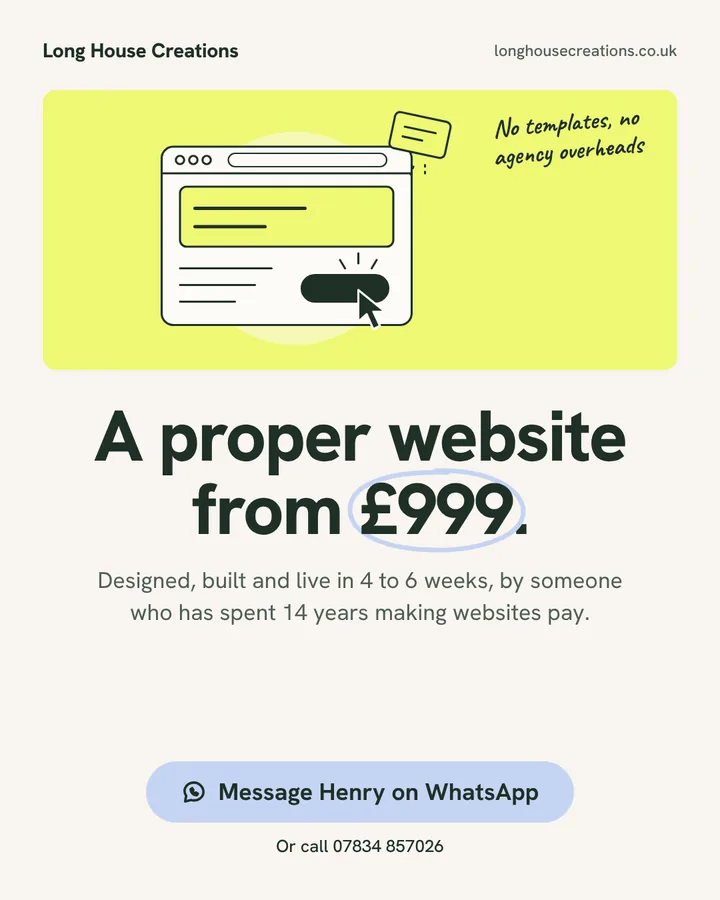
A proper website from £999. 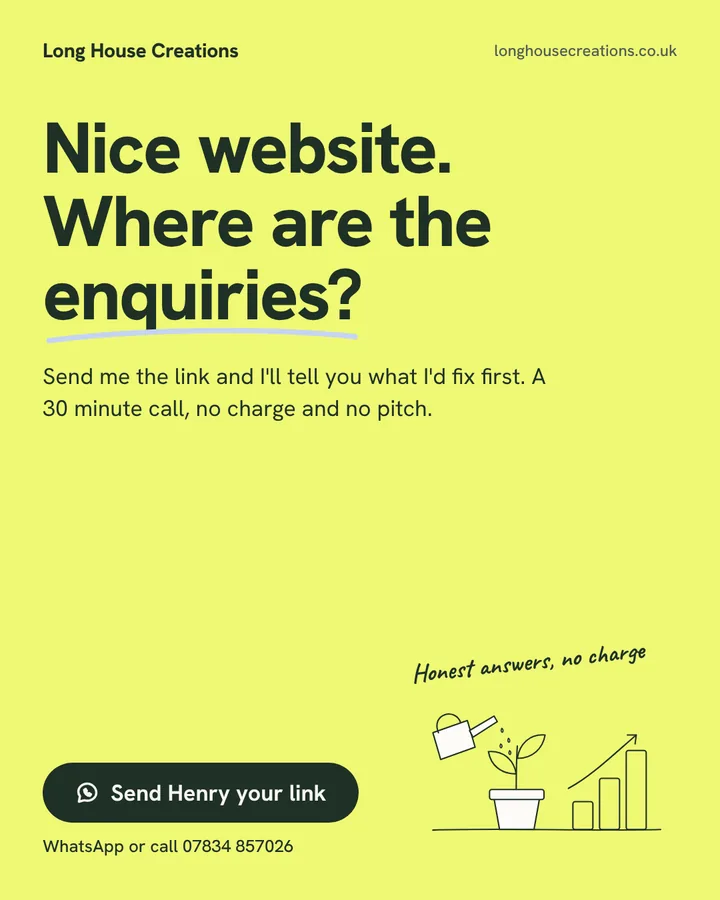
Nice website. Where are the enquiries? 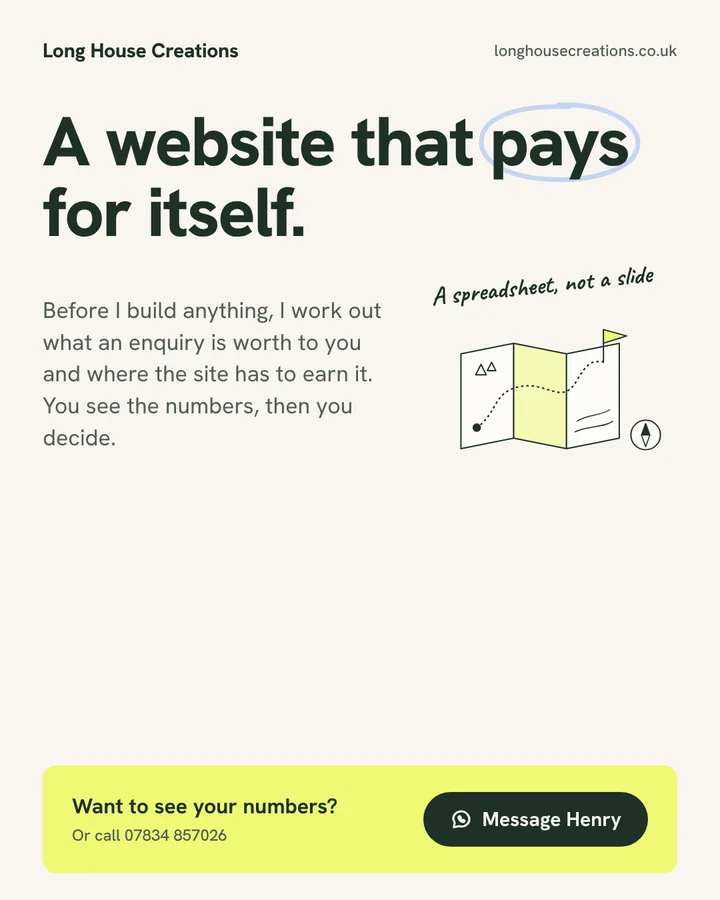
A website that pays for itself. 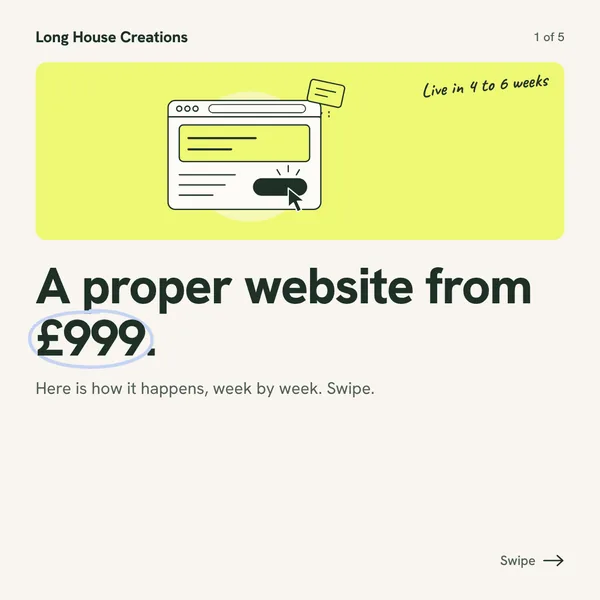
Carousel: how a £999 website happens. 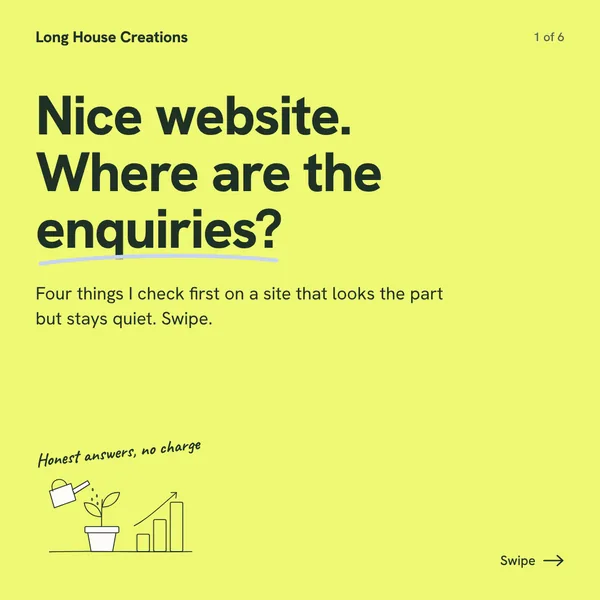
Carousel: four things I check on a quiet website.
Businesses already paying an agency
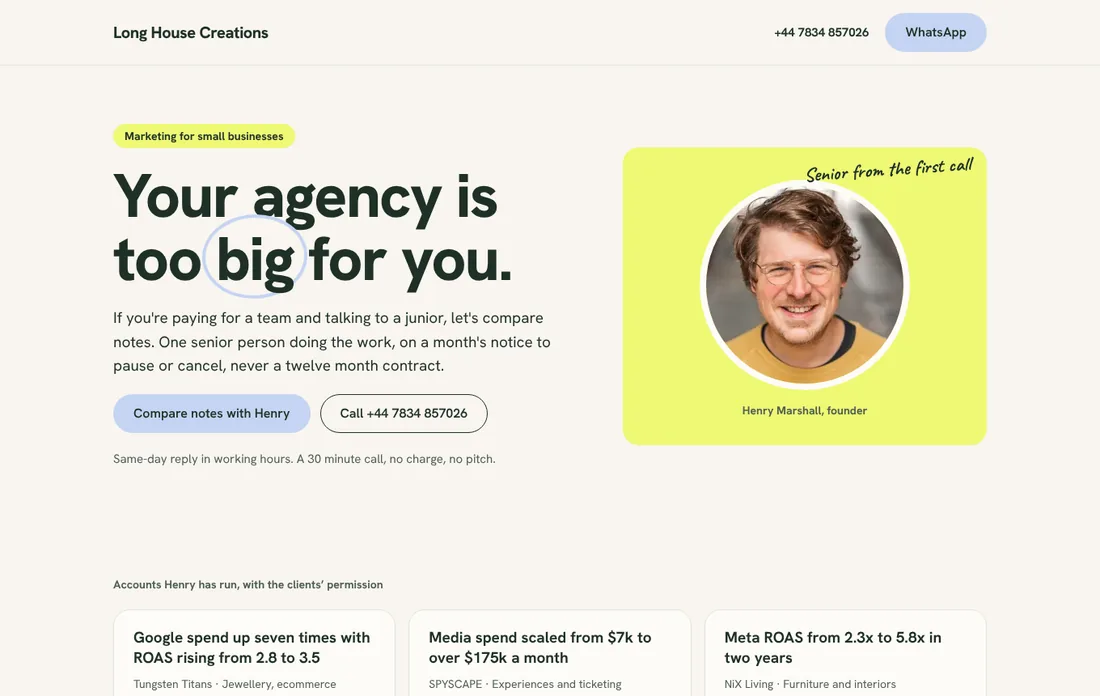
Lands on the marketing page, which sells Grow from £2,499 a month
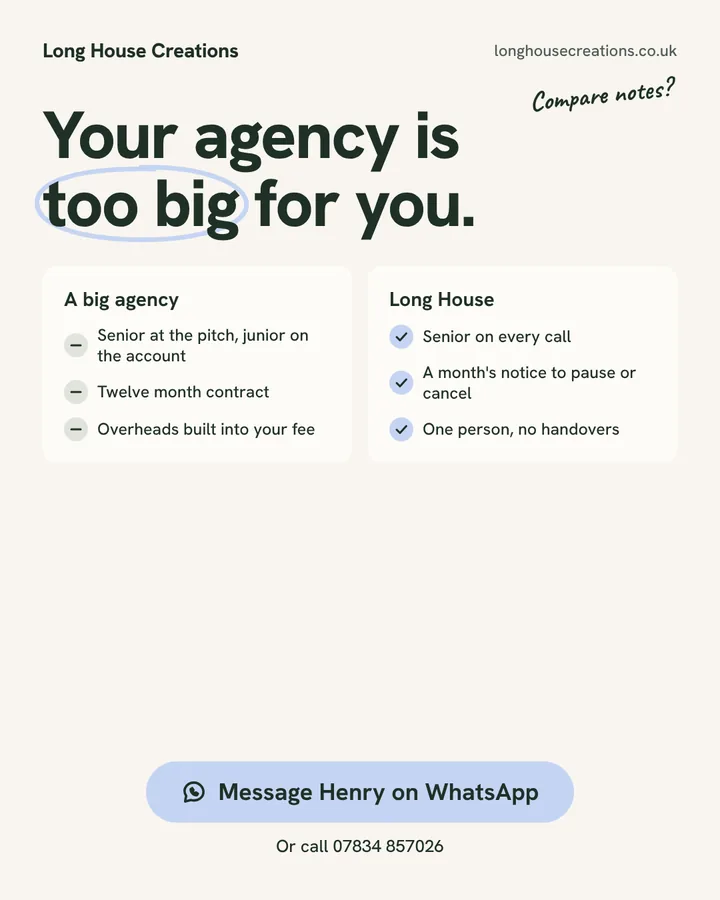
Your agency is too big for you. 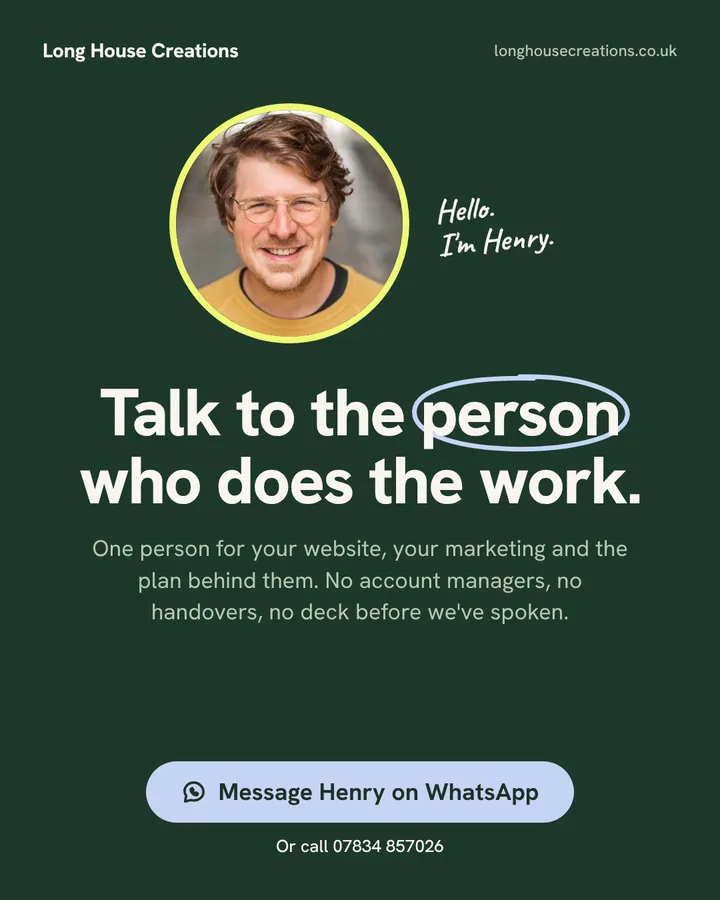
Talk to the person who does the work.
People starting a business
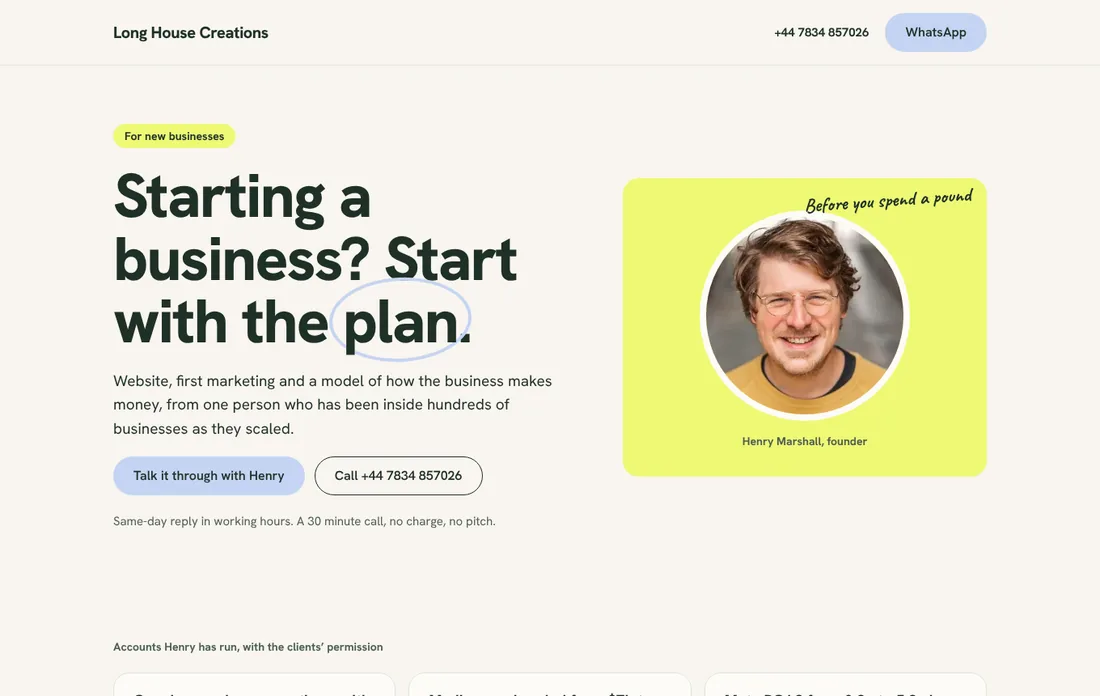
Lands on the start page, which sells the plan before the spending
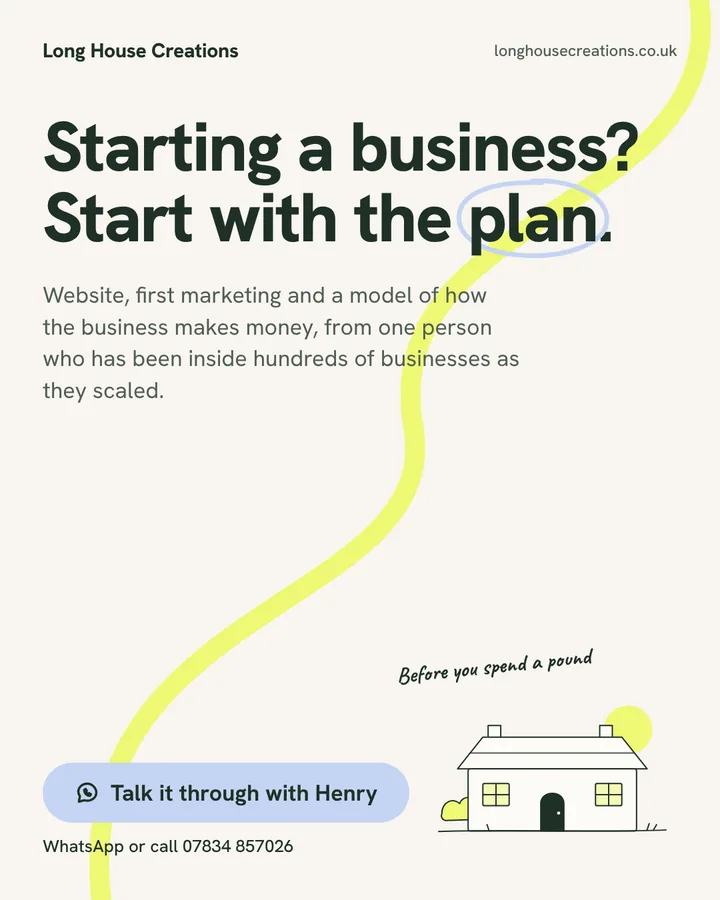
Starting a business? Start with the plan.
People who already know the name
Lands on the home page, and is shown only to people who have visited or engaged before
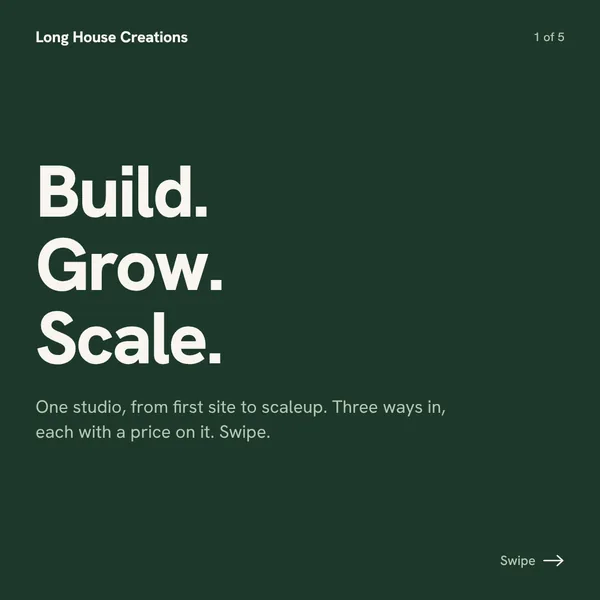
Carousel: Build. Grow. Scale.
Where does each ad land?
On a page that opens with the same headline. The landing pages have no menu and one thing to do: send Henry a WhatsApp message. Each message arrives with a line that says which ad it came from, so every conversation can be traced back to the ad that started it.
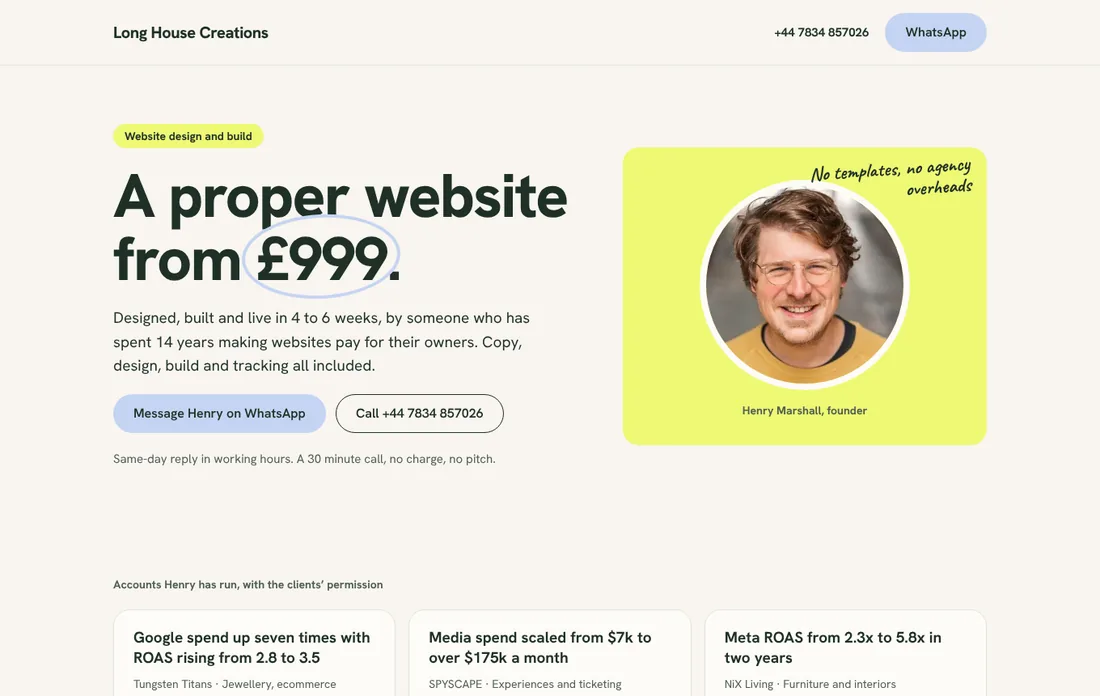
The page it opens leads with the same headline: A proper website from £999.
Below the first screen, each page sets out the proof and the price, answers the usual questions and asks for the message again. On a phone the button stays within reach, because most people who tap an Instagram ad are holding one.
Why keep the landing pages separate from the main site?
Because they do different jobs.
Someone who has just tapped an ad wants one answer and one next step, and anything else on the page gets in the way. Someone who arrives from a Google search, or from a recommendation in ChatGPT, Claude or Perplexity, usually wants to look around before they get in touch.
So the landing pages are kept out of search results, and each one has a counterpart on the main site that search engines and AI assistants find instead. Those pages are written to be read without JavaScript, answer the question near the top, and show prices and dates in the text rather than in images. It is slower work than the ads, but it keeps paying once it is done.
 BuildThe search counterpart to the website page: what a website costs, what is included and how long it takes.
 GrowThe search counterpart to the marketing page: paid search, paid social, CRM and forecasting, month to month.
 ScaleThe search counterpart to the start page: pricing, market sizing and a forecast before the spending starts.
How will the ads be rolled out?
Not all at once. Running every ad from day one spreads a small budget too thinly to learn anything.
- First, the clearest promises. The £999 website, the question about enquiries and the agency comparison run on their own for the first two weeks, so there is enough data to see which promise people act on.
- Then, the rest against the winner. The other ads and carousels are held back until one is clearly ahead, then tested against it rather than against each other.
- Alongside, the start-up ad. It runs in its own ad set with its own audience, because people starting a business behave differently from people who already run one.
- Throughout, the people who already know us. The broadest message, Build. Grow. Scale., is shown only to people who have visited the site or engaged with an ad.
How will we judge whether it worked?
Not by clicks or likes. Because every WhatsApp message carries the name of the ad that started it, each ad can be followed all the way through to paid work, rather than judged on what Meta reports. These are the measures, in order of importance, and this is the table we will fill in.
| Measure | What it tells us | Result |
|---|---|---|
| Cost per WhatsApp conversation | The first sign of whether an ad's promise is one people want to act on. | To follow |
| Conversations that become a discovery call | Whether the people the ad attracts are the right people. | To follow |
| Calls that become paid work | The only number that pays for the ads. | To follow |
Would you like the same for your business?
This is the work we do for clients: the ads, the pages they land on, and a site that can be found without them. If you would like to talk through what it might look like for you, send Henry a message.